
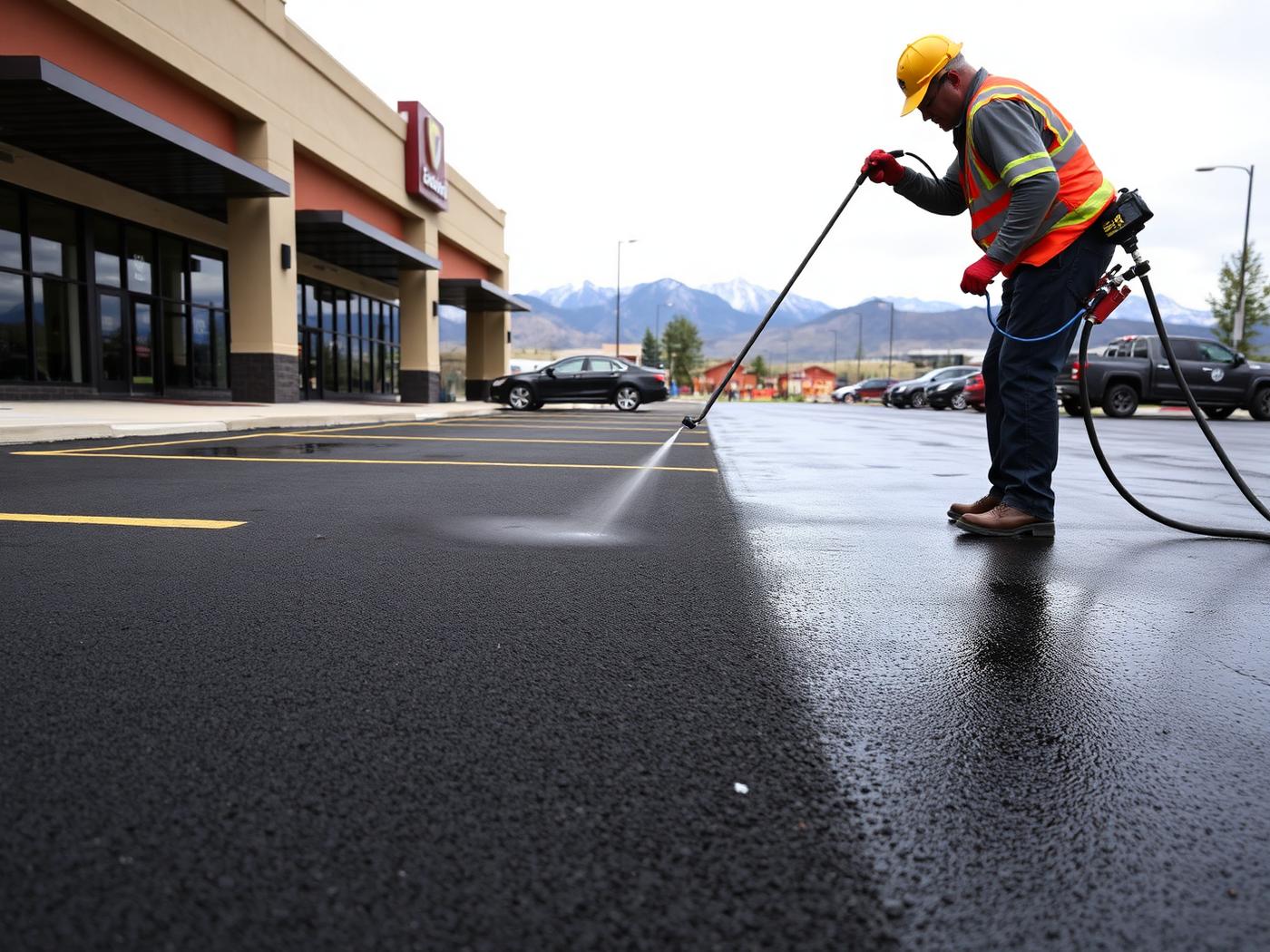
Closing the Season: What Still Gets Done After the Sealcoat Window
The sealcoating window has closed for the year, but the season is not over. What paving work still makes sense in late fall, and what should wait.
The sealcoating window in Colorado Springs has closed for the year — sealer needs warm, dry pavement to cure, and once the nights turn cold it simply will not bond the way it should. But the paving season is not over. Late fall is actually one of the most useful windows of the year, if you know what still gets done and what should wait.
Why seal coating had to stop
Seal coat is a liquid emulsion that cures by losing its water and bonding to the pavement. That process needs warmth in the surface itself, not just a pleasant afternoon. Once overnight temperatures drop and the pavement stops holding heat, a fresh coating stays soft, fails to bond, and lifts in sheets after the first real freeze. A coating put down too late is worse than none at all, which is why honest contractors stop when the window closes rather than when the phone stops ringing.
Crack filling: the late-season workhorse
Hot-applied crack filling runs well past the sealcoating window because the material does not depend on ambient curing the same way. It goes in hot, bonds to the crack walls, and stays flexible through freeze-thaw. This makes late fall the single best time of year to do it — you are sealing the pavement's openings right before the season that attacks them hardest.
Every open crack going into winter is a water inlet. Water gets in, freezes, expands, and levers the crack wider, dozens of times over the season. A crack filled in November is a pothole that never happens in March. If only one thing gets done on your pavement before winter, this is the one.
Pothole and patch repairs
Structural repairs can often continue while conditions stay dry. Cutting out a failed section, rebuilding the base and patching it properly does not require the sustained warmth that coating work does. Getting known failures repaired before winter matters doubly: an open pothole in freeze-thaw season grows fast, and it is a safety and liability problem on any property with traffic.
Grading, drainage and recycled asphalt
Late fall is prime time for the work that is not temperature-sensitive at all. Grading and drainage correction, building and repairing recycled asphalt driveways and ranch roads, fixing washouts and crowning roads so meltwater sheds instead of ponds — this work runs as long as the ground can be worked, and doing it now means the property rides through winter instead of deteriorating through it.
For rural properties in Falcon, Peyton and out toward Calhan, this is the season to fix the driveway problems you fought all last spring.
Planning and estimates for spring
Here is the part most property owners miss: late fall and winter are when the smartest spring projects get started. A site visit now, while the damage from this year is still visible, produces a better scope than a rushed April estimate. You get a written plan, a real number, and a place on the spring schedule instead of a spot in the spring phone queue.
For HOAs and property managers, this matters even more — budgets and board approvals move slowly, and the projects that pave early are the ones that were decided over the winter.
What genuinely has to wait
Seal coating is the obvious one. So is most striping on freshly sealed surfaces, for the same curing reasons. And any project that depends on sustained warm, dry conditions is honestly better scheduled for spring than forced into a marginal late-fall window. We will tell you plainly when that is the case — a job done in the wrong conditions is a job done twice.
The honest bottom line
The season closing does not mean the phone stops being answered. Crack filling, structural repair, grading, drainage and recycled asphalt work all still make sense, and planning for spring starts now. Call and we will tell you straight what your pavement can still take this year and what should be scheduled for the thaw.
A word on winter itself
Once the ground freezes and the snow sets in, the work narrows again — emergency repairs, hazard fills and planning. That is normal and seasonal, and it is why the late-fall window matters so much: it is the last stretch where the full range of preventive work is still on the table. Property owners who use it spend the winter watching their pavement hold. Owners who wait spend it watching the damage grow, knowing every storm is making the spring list longer.
How to prioritize if the budget only covers some of it
If you cannot do everything before winter, rank by what winter will make worse. Open cracks and active potholes first — freeze-thaw multiplies those daily. Drainage problems second, because every melt feeds them. Cosmetic work last, because appearance does not deteriorate in the cold the way structure does. A short, honest conversation about your specific pavement will sort the list quickly; the right order is almost never the order the problems were noticed in.
What we tell our own customers this time of year
When someone calls in late October asking for sealer, we tell them the truth: the window is closed and anyone willing to coat their driveway this week is selling them a failure. Then we ask what they are actually worried about. Nine times out of ten the worry is winter damage, and the right answer to that is crack filling, not coating — it protects through the freeze-thaw season and costs less. The tenth time, the driveway just looks tired, and the honest answer is that tired-looking pavement survives winter fine and can be sealed beautifully in spring. Either way, the customer ends up with work that actually holds instead of a coating that lifts.
Free written estimates across Colorado Springs and El Paso County, all season long — call (719) 233-6810.
See our hot tar crack filling service or our seal coating service.
Ready to pave or protect your lot?
Paving, chip seal, seal coating, crack filling and striping across Colorado — free written estimates.