
Freeze-Thaw in Colorado Springs: How Winter Turns a Crack Into a Pothole
One Colorado winter can turn a hairline crack into a pothole. How the freeze-thaw cycle actually works on asphalt, and how to break it before it starts.
Every spring in Colorado Springs, pavement comes out of winter with damage nobody remembers seeing in the fall. Cracks that were hairlines in October are open seams in April, and spots that looked fine are potholes. It is not bad luck — it is a mechanical process called freeze-thaw, and once you understand it, you can interrupt it.
The cycle, step by step
It starts with water in a crack. Rain or snowmelt runs across the pavement and drains into every opening it finds. Some of that water keeps going, down into the base layers under the asphalt.
Then the temperature drops — which at our elevation it does fast and often. Water in the crack freezes, and freezing water expands. That expansion pushes the crack walls apart, widening the opening and breaking the bond between the asphalt and whatever is beneath it. The ice melts, the water drains a little deeper into the space it just made, and the next cold night does it again.
Each cycle is small. Dozens of cycles over a winter are not. By spring the crack is wider, the edges are broken, the base underneath is wet and loose — and the first heavy vehicle over the weakened spot finishes the job. That is your pothole.
Why Colorado gets it worse than most places
Freeze-thaw damage scales with the number of cycles, not the depth of the cold. Places that freeze hard in November and stay frozen until March actually get fewer cycles — the water locks up once and stays locked. Colorado Springs sits in the worst band: warm afternoons that melt everything, cold nights that freeze it again, over and over, from fall through spring.
Our elevation adds a second problem. The high-altitude sun is hard on asphalt binder, oxidizing the surface and making it brittle sooner — and a brittle, oxidized surface cracks more easily, which starts the whole cycle. The sun creates the cracks; the freeze-thaw weaponizes them.
The cracks that matter most
Not every crack is equally urgent. Hairline surface cracks that have not opened up are worth sealing but are not emergencies. The ones to take seriously are cracks wide enough to take water freely, cracks that show any vertical movement from one side to the other, and anything in a low spot where water ponds. Those are the ones winter will convert.
Alligator cracking — the interconnected pattern that looks like scales — is past the crack stage entirely. That pattern means the base underneath is already moving, and filling the surface will not stop it.
How to break the cycle
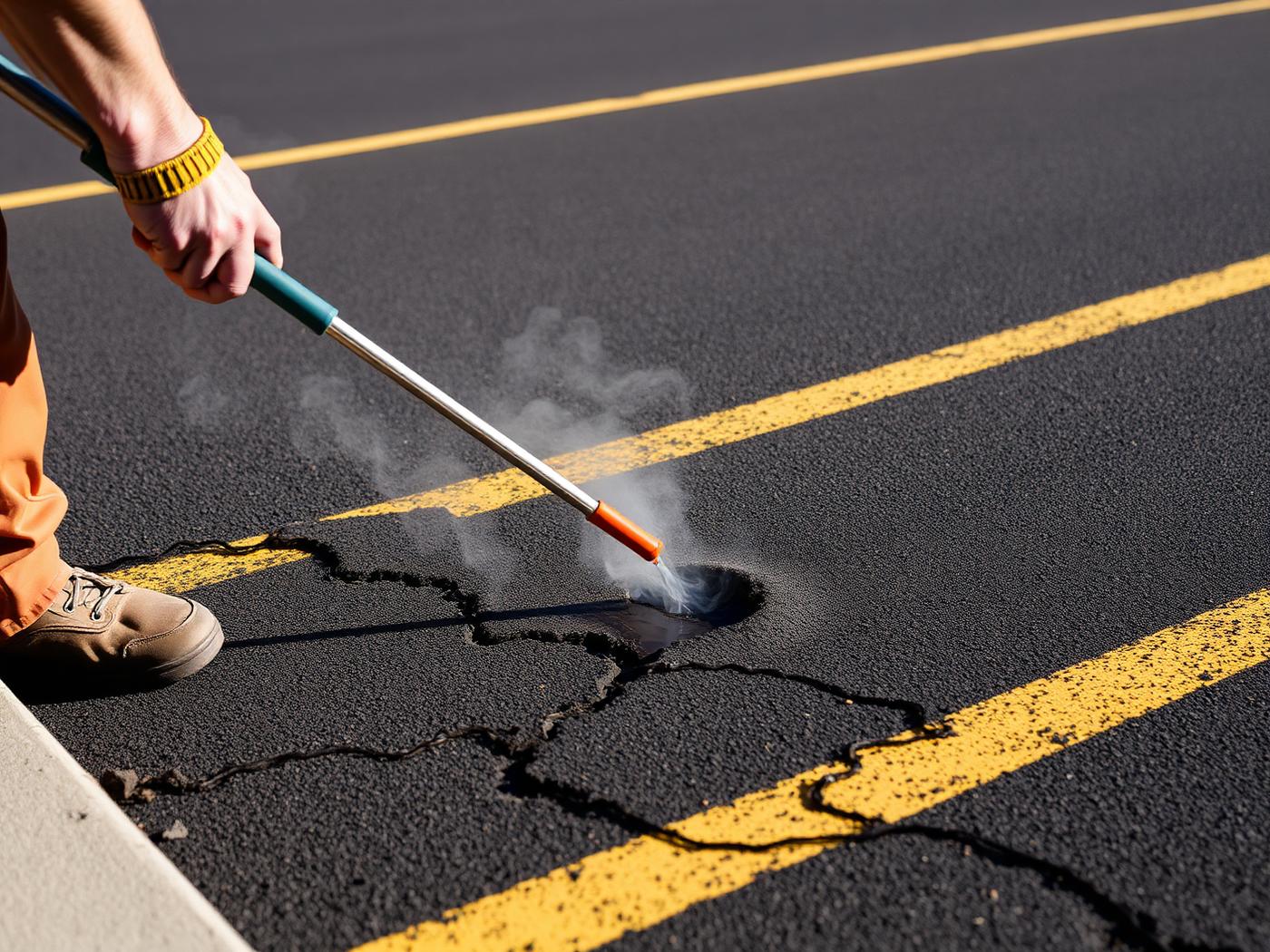
The intervention is simple in principle: keep the water out. Hot-applied crack filling does exactly that — a flexible, rubberized material is placed into the cleaned crack, where it bonds to the walls and moves with the pavement through freeze and thaw without letting water past.
Timing matters. Crack filling works best going into winter, before the cycles start, because the point is to deny water entry through the whole freeze-thaw season. A crack filled in fall sits sealed through every freeze. The same crack left open until spring has already done its damage.
What happens if you wait
The economics are brutal and simple. A crack filled this fall is a small, cheap line item. The same location next spring may be a pothole needing a proper patch — more material, more labor, more equipment. Left another season, the base fails and the repair becomes full-depth: excavation, base rebuild, new asphalt. Every stage of waiting multiplies the cost of the fix.
Worse, the damage does not stay in its lane. Water that enters through one crack migrates through the base and weakens the pavement around it. One open crack rarely becomes one pothole.
The fall walk that saves you money
Before the freeze-thaw season sets in, walk your pavement slowly. Mark every crack that would take water, note the low spots, and photograph anything that looks like alligatoring. That fifteen-minute walk turns into a targeted crack-filling scope that protects the whole surface — and a much smaller invoice than the one spring would have handed you.
Why the same spots fail first
Freeze-thaw does not attack a lot evenly. It concentrates where water concentrates: low spots, the bottoms of slopes, the mouths of downspouts, shaded sections that never quite dry, and anywhere drainage was an afterthought. If your pavement has a history of one corner always failing, that corner is telling you where the water lives. Treating the crack without addressing why that spot stays wet is half a fix — the better repair pairs the crack work with whatever grading or drainage change keeps the area dry.
What the spring thaw reveals
If you did not get to the cracks this fall, all is not lost — but use the thaw wisely. The first warm stretch of spring is when the winter's work becomes fully visible: new cracks, widened old ones, soft spots and fresh potholes. Walk the property early, document everything, and get repairs scoped before the spring rush. Damage caught at the thaw is still cheap damage. The same damage discovered by a customer's tire in June has usually grown.
We fill cracks across Colorado Springs, Monument, Woodland Park and Security-Widefield every fall for exactly this reason. Free written estimates — call (719) 233-6810.
See our hot tar crack filling service or our asphalt paving and repair service.
Ready to pave or protect your lot?
Paving, chip seal, seal coating, crack filling and striping across Colorado — free written estimates.