
Getting a New Driveway Paved: What Actually Happens
From the first walk to the last roll. Excavation, base, grade, hot mix and cure time, and the questions worth asking before you sign.
Most homeowners pave a driveway once, maybe twice, in the time they own a house. So the process is unfamiliar, and unfamiliar is where bad bids hide. Here is what a proper paving job looks like from the first visit to the day you park on it.
The walk and measure
Every real estimate starts with someone walking the driveway. We are looking at more than square footage — slope, drainage, soft spots, tree roots, the condition of what is there now and where water currently goes. A quote given from a satellite image without a site visit is guessing, and you will pay for the guess later.
Base preparation decides the lifespan
Here is the part nobody sees and everybody pays for. The existing surface gets excavated or milled out, soft sub-grade gets dug out and replaced, and new base material goes down in lifts, each one compacted before the next. The asphalt on top is only as good as what is under it — a driveway over a poorly compacted base will crack and settle no matter how nice the surface looks on day one. This is where cheap bids cut, because you cannot see base depth from the street.
Drainage: where does the water go
Before any hot mix is ordered, the grade has to answer one question: where does water go? Away from the garage, away from the house, off the pavement. A driveway that ponds water is a driveway with a countdown on it, especially in Colorado where standing water becomes expanding ice. If a contractor's plan does not mention drainage, ask why.
Paving day
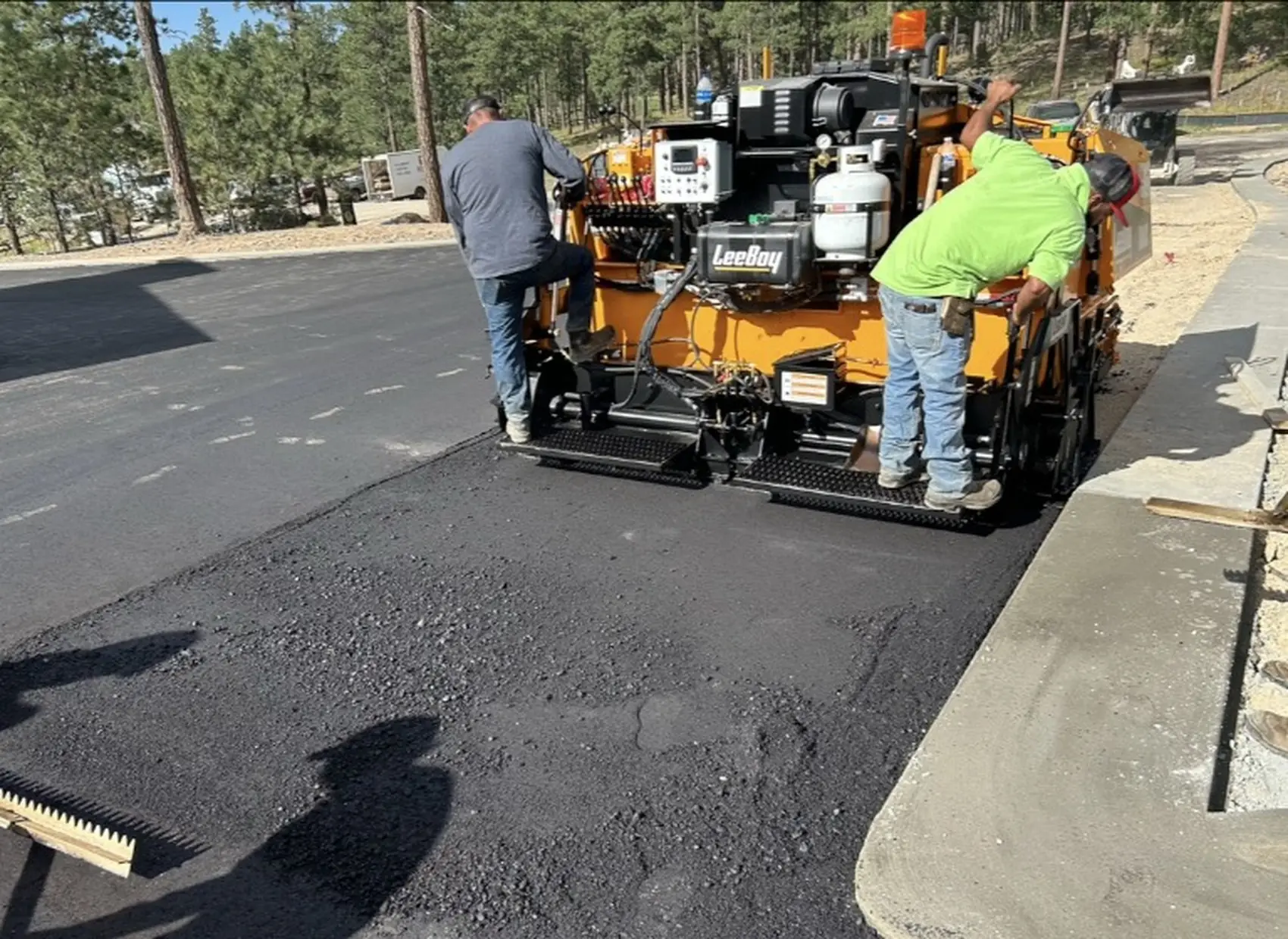
Hot mix arrives hot and has to be placed and compacted while it is still in its working range — mat temperature matters, which is why paving is a coordinated operation, not a leisurely one. The mix goes down, is screeded to grade, and then rolled: a breakdown pass to compact it, then finish rolling to smooth it. Edges and the transitions to your garage apron and the street get hand-worked so they are clean and tight.
Cure time and first parking
Fresh asphalt is firm enough to walk on quickly but needs time before it carries vehicle weight without marking, and it continues to harden for months. We will tell you when it is ready for your vehicles based on the weather at the time — heat slows curing, so a summer pour stays tender longer than a fall one. When in doubt, give it extra time.
What marks are normal
New asphalt scuffs. Power steering turned while stationary leaves marks. Kickstands, trailer jacks and sharp ladder feet can dent it on hot days during the first season. Most of these blend in as the surface weathers and are cosmetic, not structural. Deep gouges or cracking are not normal — those are worth a call.
The questions worth asking before you sign
Three questions separate real bids from cheap ones. How deep is the base, and what material? How deep is the hot mix, compacted? And who is responsible for drainage — is grading to move water part of the scope or an extra? Any contractor doing honest work answers these in writing without blinking.
Free written estimates across Colorado Springs and the surrounding counties. Call (719) 233-6810.
See our asphalt paving service.
Ready to pave or protect your lot?
Paving, chip seal, seal coating, crack filling and striping across Colorado — free written estimates.