
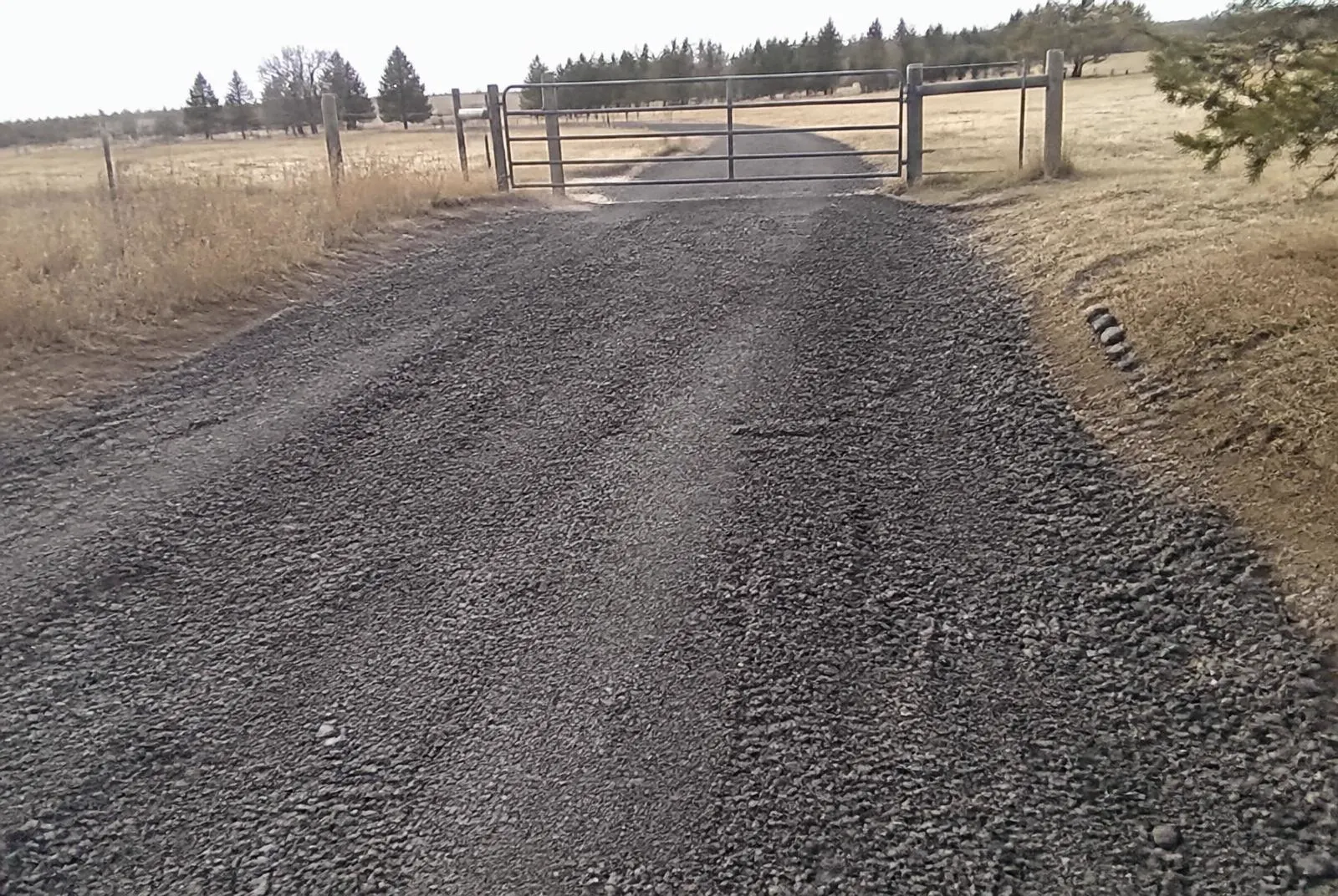
Recycled Asphalt Driveways in Colorado: What to Expect
How recycled asphalt millings compare to hot mix and gravel for long driveways and ranch roads, and where they are the right call.
If you have a long driveway, a ranch road or a parking area out in Falcon, Peyton or the Black Forest, you have probably heard recycled asphalt mentioned as the budget answer. Sometimes it is. Here is what it actually is, what it does well and where it falls short.
What recycled asphalt actually is
Recycled asphalt pavement — millings — is old asphalt that has been ground off roads and lots during resurfacing work. The material still contains the original binder, which is what makes it behave differently from plain gravel. You are essentially getting weathered asphalt in crushed form, ready to be given a second life as a new surface.
How it binds over time
This is the part people do not expect. Fresh millings go down loose, get graded and compacted, and then something useful happens: summer sun softens the residual binder in the material, traffic kneads it, and the surface gradually knits itself together. A recycled asphalt drive after a full Colorado summer is noticeably tighter and harder than the day it was installed. It will never be hot mix, but it is not gravel either.
Versus gravel
Against gravel, millings win on the things that make gravel miserable. Less dust, because the fines bind instead of floating. Less washboarding, because the surface holds its shape instead of rippling under tires. Less maintenance, because material stays where you put it instead of migrating to the ditch every spring. Gravel is cheaper the day it goes down; millings are cheaper to live with.
Versus hot mix
Against new hot mix asphalt, the trade is straightforward. Hot mix is a structural pavement with a smooth, sealed, uniform surface — and a price to match. Recycled asphalt costs significantly less, looks more rustic, and will not take a sealer or striping the way hot mix will. For a suburban driveway in Colorado Springs where appearance matters, hot mix is usually the right call. For a thousand feet of ranch road, the math often runs the other way.
Where it works best
Long rural driveways, ranch and acreage roads, overflow parking areas, equipment yards, and anywhere you need a solid, dust-free, all-weather surface without the cost of paving. We install a lot of it in Elbert and eastern El Paso County for exactly these uses.
New versus after a season
Fresh millings look gray and slightly rough, almost like coarse gravel with a darker tone. After a season of sun and traffic the surface darkens, tightens and reads more like weathered asphalt. Owners who expect it to look like fresh blacktop on day one are disappointed; owners who judge it in month six usually are not.
Grading and base still decide everything
No surface material fixes bad drainage or a soft sub-grade. The road still needs to be shaped so water sheds off it, soft spots still need to be dug out, and the crown or slope has to be right before a yard of material is delivered. Skipping prep is how a recycled asphalt road becomes a muddy mess after the first wet spring. Done on a properly graded base, it is one of the best value surfaces we build.
Long driveway or ranch road you are tired of grading? Free written estimates. Call (719) 233-6810.
See our recycled asphalt service or our dirt work and grading service.
Ready to pave or protect your lot?
Paving, chip seal, seal coating, crack filling and striping across Colorado — free written estimates.