
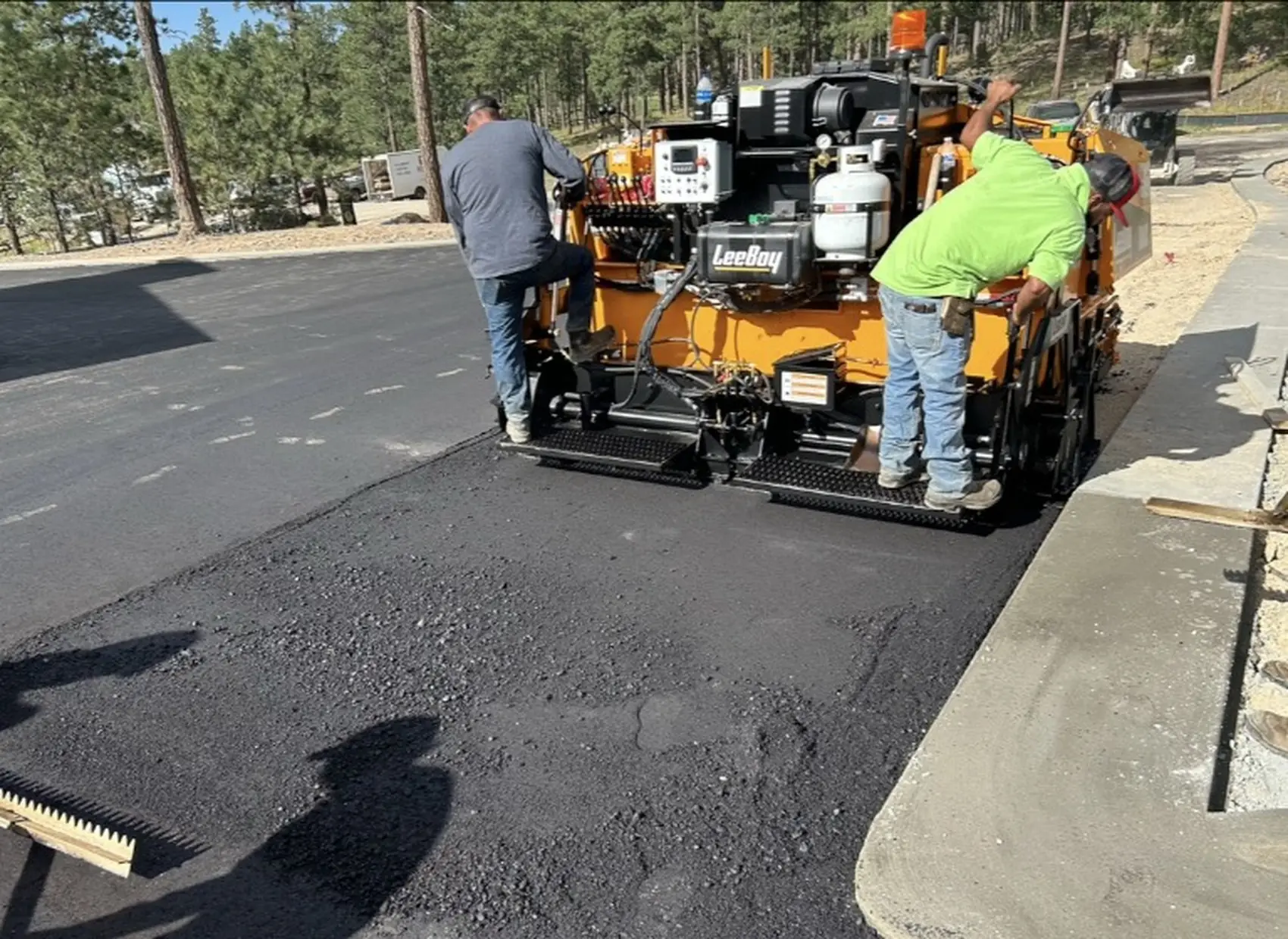
Planning a Spring Paving Project: What to Decide Over the Winter
Winter is when smart paving projects get planned. What to decide now, what to gather, and how to be first on the schedule when the ground warms.
The best spring paving projects are decided in winter. By the time the ground thaws and the plants fire back up, the contractors worth hiring are already booking out — and the property owners who planned ahead get the early slots, the unhurried site visits and the thoughtful bids.
If you know your driveway, private road or parking lot needs real work next year, the off-season is not dead time. It is your planning window. Here is how to use it.
Why winter planning beats spring scrambling
Every spring the same thing happens across Colorado Springs: the first warm week arrives, everyone looks at their pavement at the same time, and every paving phone in El Paso County starts ringing. Contractors get buried in estimate requests, site visits get rushed, and the schedule fills from the front.
The owner who calls in January gets a different experience. There is time to walk the property properly, talk through options, get a written scope and think about it without pressure. The decision quality goes up simply because nobody is in a hurry.
Decide what problem you are actually solving
Before you talk to anyone, get clear on what is bothering you. Is it appearance — the lot looks tired and gray? Is it function — puddles, potholes, a rough ride? Is it safety — trip edges, faded striping, bad drainage toward the building?
The answer shapes everything. A surface that looks bad but performs fine might need sealing and striping, not paving. A surface that holds water or pumps under vehicles has a structural problem that sealer will never touch. Write down what you actually want fixed, in plain language, before the first site visit.
Walk it now and take photos
Winter is honest about pavement. Low sun shows every rut and heave, meltwater shows you exactly where drainage fails, and plow season exposes every weak edge. Walk your property after a melt and photograph where water stands, where it runs, and where the surface is breaking.
Those photos are gold in a spring estimate conversation. A contractor can see the failure pattern instead of guessing, and you can compare what you were told against what the pavement actually did all winter.
Gather the information a real bid needs
A serious estimate needs more than a phone call. Rough dimensions or a property map help. So does history: when the pavement was last worked on, what was done, whether there are known soft spots, old utility cuts, or areas that have been patched repeatedly.
For commercial properties and HOAs, add the operational constraints — tenant access, delivery schedules, fire lane requirements, budget cycles. The more of this you bring to the table, the more accurate and comparable the bids you get back.
Understand the options before you compare prices
Overlay, full-depth replacement, chip seal, recycled asphalt, targeted repair plus sealing — these are different answers to different problems, and they are not interchangeable line items. A bid that is dramatically lower than the others is usually answering a different question.
Use the winter to learn what each option actually involves. When the bids arrive you will be comparing scopes, not just totals, and you will spot the proposal that quietly leaves out base work or drainage correction.
Budget and board approval take longer than paving
For HOA boards and property managers, this is the real reason to start now. Getting a capital project approved, funded and scheduled involves meetings, notice periods and budget cycles that move slower than any crew. Boards that start the conversation in winter vote in time to pave in spring. Boards that start in spring pave the following year.
Get on the schedule early
Paving in Colorado is seasonal work with a real window, and the calendar fills from the front. A signed, well-scoped project booked early gets the pick of dates. A project decided in May gets what is left.
None of this commits you to anything. A winter site visit and a written estimate cost you nothing but an hour, and they turn spring from a scramble into a scheduled job.
The questions worth deciding before you call
A little homework makes the first conversation far more productive. Think about how the surface is actually used: who parks on it, how heavy the vehicles are, whether delivery trucks or trailers ever come through. Think about timing constraints — a business that cannot close its lot needs phasing, and a household with one driveway needs a plan for where the cars go. And think about how long you expect to own the property, because the right answer for a forever home and the right answer for a property being prepared for sale are not always the same.
None of these questions have wrong answers. They just change which option is right, and having thought about them means the estimate conversation starts from your reality instead of a generic pitch.
What a good winter site visit looks like
Expect a walk of the whole property, not a glance from the truck. A contractor doing this properly will look at drainage, probe the soft spots, ask about the history of the pavement and take measurements. You should come away with a written scope that says what will be done, in what order, and what it does not include. If a proposal is one line and a number, it is not a plan — it is a guess with a price attached.
Planning a project for next season? We walk properties all winter across Colorado Springs, Falcon, Monument and the surrounding area. Free written estimates — call (719) 233-6810.
See our asphalt paving service.
Ready to pave or protect your lot?
Paving, chip seal, seal coating, crack filling and striping across Colorado — free written estimates.