
Potholes in Winter: Temporary Repair Versus Doing It Properly
Winter potholes cannot always be fixed properly the day they appear. What a temporary repair actually does, when it is the right call, and when to wait.
A pothole that opens up in January is a different problem from one that appears in June. The permanent repair may not be possible yet — but the hole still has to be dealt with. Understanding the difference between a temporary repair and a proper one keeps you safe now and saves you from paying twice later.
Why winter repairs are different
A lasting asphalt repair needs dry conditions and material that can be worked and compacted properly. In the middle of a Colorado winter, with frozen ground, snow cover and plants running limited schedules, the conditions for a permanent fix often simply do not exist.
That does not mean nothing can be done. It means the honest conversation is about what can be done now versus what should be scheduled for when conditions allow.
What a temporary repair actually is
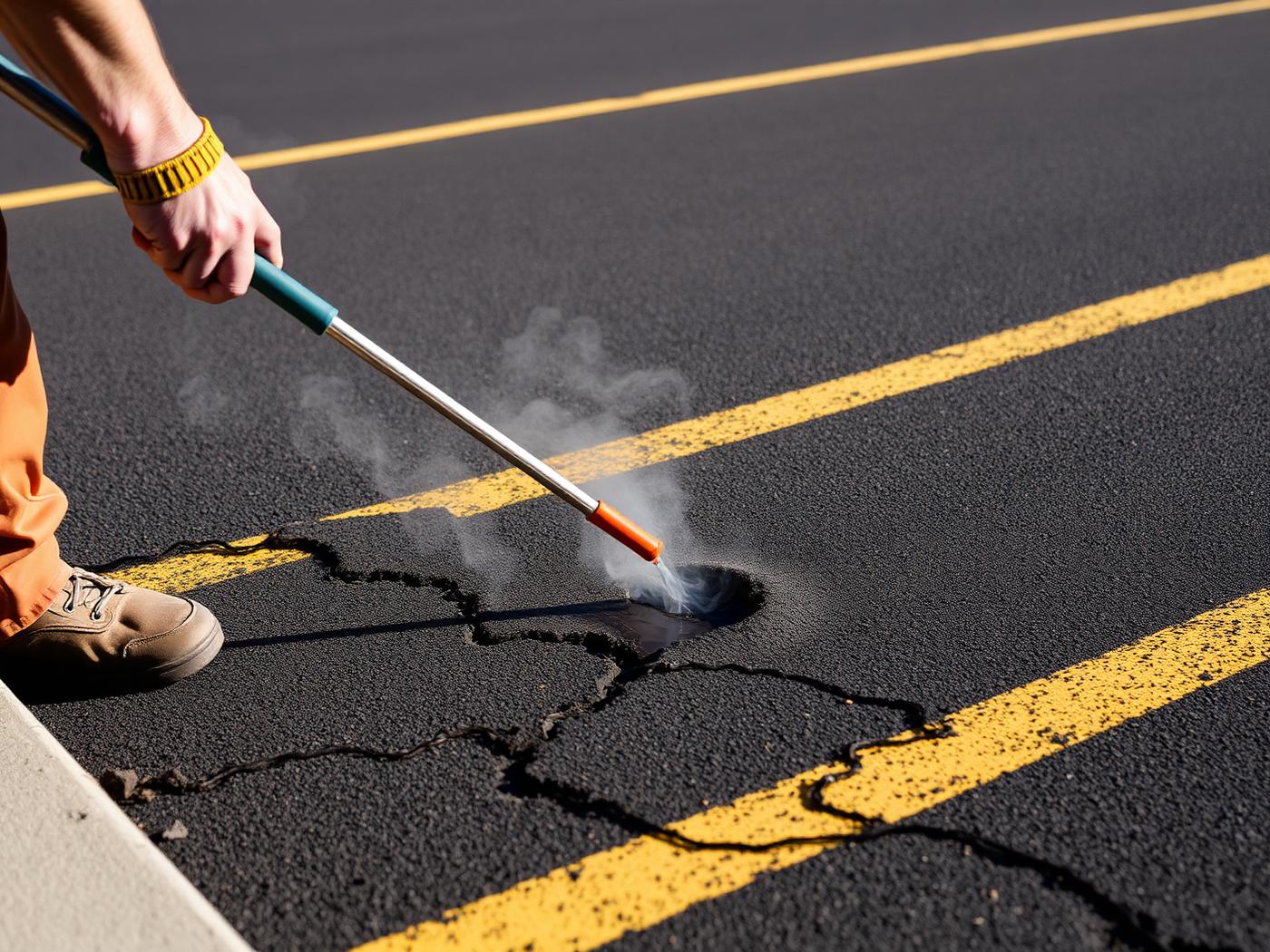
A temporary repair fills the hole so it is safe. Material goes in, gets compacted as well as conditions allow, and traffic can use the surface without bending a wheel or tripping. That is the whole job — safety and damage control, not permanence.
Temporary material in a wet, freezing hole is fighting physics. Moisture and freeze-thaw work on it from the first night, and some of it will ravel out or pop loose before spring. That is not a failed repair; it is a temporary one behaving exactly as expected.
When temporary is the right call
Temporary repair is right when the hole is a hazard that cannot wait — a pothole in a drive lane, at a building entrance, in a walkway, or anywhere vehicles or people move every day. Liability and safety do not wait for warm weather.
It is also right when the hole is actively growing. An open pothole in freeze-thaw season lets more water into the base every storm, and every freeze makes it bigger. Filling it, even temporarily, slows the damage to everything around it.
When to wait and do it properly
If the hole is in a low-traffic corner, is not a safety issue, and is not growing, waiting is often the smarter money. A proper repair — cut back to sound edges, clean and dry faces, correct material, compacted in lifts — done in suitable conditions will outlast several rounds of winter patching.
The judgement call is risk versus cost. We will tell you honestly which situation you are in, because a temporary patch you did not need is wasted money, and a hazard left open all winter is worse.
What a proper repair involves when conditions allow
When the weather and the pavement cooperate, the temporary fill comes out and the repair is done for real. The damaged area is cut square back to solid asphalt, the hole is cleaned and dried, the faces are tacked so new material bonds, and the fill is placed and compacted in layers.
If the base underneath has failed — which repeated winter potholes in the same spot usually means — the repair goes deeper: the failed base comes out, gets rebuilt and compacted, and the new surface goes down on ground that can actually carry load.
The repeat-offender pothole
A pothole that reopens in the same place every winter is not a pothole problem. It is a base or drainage problem announcing itself. Water is getting under the pavement there — from a low spot, a downspout, a failed joint — and no surface patch will survive it. That is the spot where full-depth repair stops being the expensive option and becomes the only one that ends the cycle.
What to do right now
Walk your lot or driveway and mark every hole. Note which ones are in traffic paths, which hold water, and which came back after last year's repair. That list tells a contractor more than any phone description, and it turns a spring repair visit into a single planned trip instead of a series of surprises.
A word on cold-season materials
You will hear the term cold patch used loosely. It covers a range of products, from bagged material sold at hardware stores to proprietary mixes contractors carry in winter. The honest framing is that all of them are holding measures. Some hold better than others, and placement matters more than the bag — a hole that is cleaned, squared and compacted will keep a temporary fill far longer than one that is swept with a boot and dumped. But none of them are a substitute for the proper repair when the season allows it, and anyone who sells you a winter patch as a permanent fix is telling you something convenient rather than true.
For property managers: the liability angle
On a commercial lot or HOA road, a known pothole is a known hazard, and that changes the math. The cost of a temporary fill is trivial next to a bent rim claim, a trip-and-fall, or a tenant dispute over vehicle damage. Document the holes, fill the hazardous ones promptly, and schedule the permanent repairs for the first suitable window. A dated photo log and a work order trail is the posture of a manager who takes the property seriously, and it reads that way to owners, tenants and insurers alike.
Dealing with potholes in Colorado Springs, Security-Widefield or Fountain? We will tell you straight whether it needs a temporary fill now or a proper repair when conditions allow. Free written estimates — call (719) 233-6810.
See our asphalt paving and repair service or our hot tar crack filling service.
Ready to pave or protect your lot?
Paving, chip seal, seal coating, crack filling and striping across Colorado — free written estimates.